How to Choose the Right Bladder Scanner for Your Facility
How to Choose the Right Bladder Scanner for Your Facility
Selecting the appropriate bladder scanner for your healthcare facility is a critical decision that impacts patient care quality, clinical efficiency, and cost-effectiveness. This comprehensive guide examines the key factors healthcare professionals should consider when choosing bladder scanning equipment.
Understanding Bladder Scanner Technology
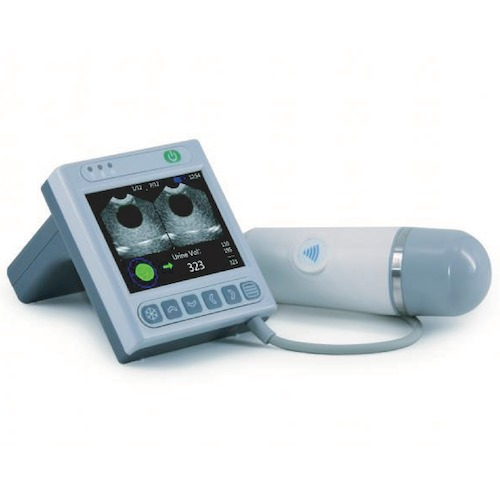
Bladder scanners utilize ultrasound technology to provide non-invasive measurement of bladder volume and post-void residual urine. These portable ultrasound devices have become essential tools in urology practices, hospitals, care homes, emergency departments, and general practice settings.
The fundamental principle involves directing ultrasound waves toward the bladder, which then reflect back to create a three-dimensional image. Advanced algorithms calculate bladder volume based on these reflections, providing accurate measurements without the need for catheterization.
Key Factors in Bladder Scanner Selection
Clinical Applications and Patient Population
The primary consideration when selecting a bladder scanner is understanding your specific clinical applications. Different healthcare settings have varying requirements:
Urology Practices require high-accuracy devices capable of detailed bladder volume assessment and post-void residual measurement. These facilities often benefit from advanced features such as 3D imaging and wireless connectivity.
Emergency Departments need rapid measurement capabilities and ease of use, as staff may have varying levels of ultrasound experience. Devices with quick scan times and intuitive interfaces are essential.
Geriatric Care Facilities benefit from portable, lightweight scanners that can be easily transported between patient rooms. Battery life and ease of operation are critical factors for care home environments.
General Practice settings often require cost-effective solutions that balance accuracy with affordability, as bladder scanning may not be the primary focus of the practice.
Accuracy and Measurement Range
Clinical accuracy is paramount when selecting bladder scanning equipment. Most modern bladder scanners provide accuracy within ±15% or ±15ml, which is considered clinically acceptable for most applications.
The measurement range is equally important. Standard bladder scanners typically measure volumes from 0 to 999ml, which covers the vast majority of clinical scenarios. However, some advanced models offer extended ranges for specialized applications.
Portability and Design Considerations
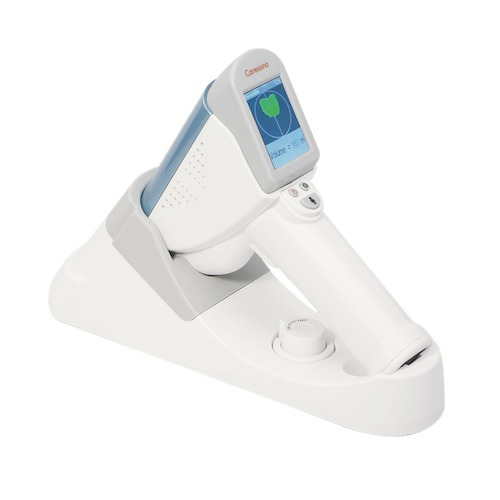
Portability significantly impacts clinical workflow and device utilization. Handheld designs offer maximum portability, allowing clinicians to perform bedside assessments quickly. These devices are ideal for facilities where the scanner will be moved frequently between locations.
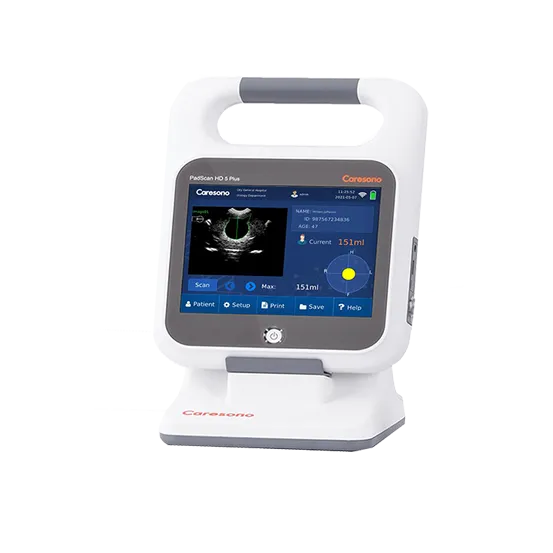
Wireless models provide additional flexibility by eliminating cable constraints during examinations. The Caresono HD5 Plus, for example, features wireless operation that enhances clinical convenience and patient comfort.
Weight and ergonomics matter for devices that will be used frequently throughout the day. Lightweight designs reduce clinician fatigue and improve examination efficiency.
Display and User Interface
The display quality and user interface directly impact ease of use and clinical confidence. Colour LCD screens provide clear visualization of bladder images and measurement data. Screen sizes typically range from 2.5 to 5 inches, with larger displays offering better visibility in various lighting conditions.
Intuitive interfaces reduce training time and minimize operational errors. Look for devices with clear menu structures, straightforward measurement procedures, and minimal button complexity.
Battery Life and Power Management
For portable bladder scanners, battery performance is crucial. Devices should provide sufficient scanning time to complete a full day's examinations without recharging. Most quality scanners offer 3.5 to 8 hours of active scanning time.
Consider both scanning time (active use) and standby time (powered on but not actively scanning). Devices with longer standby times provide greater flexibility in clinical workflows.
Calibration Requirements
Some bladder scanners require regular calibration to maintain accuracy, while others feature no-calibration technology. The Caresono HD5 Plus, for instance, incorporates a patented no-calibration probe that eliminates this maintenance requirement, saving time and ensuring consistent accuracy.
Calibration-free devices reduce operational complexity and eliminate potential sources of measurement error, making them particularly attractive for busy clinical environments.
Cost Considerations: New, Ex-Demo, and Used Equipment
Budget constraints are a reality for most healthcare facilities. Understanding the options available at different price points helps optimize value:
New Equipment provides the latest technology, full manufacturer warranty, and peace of mind regarding device history. New bladder scanners typically represent the highest initial investment but offer the longest expected service life.
Ex-Demo Equipment offers substantial cost savings while providing devices that have seen minimal use. These units have been thoroughly inspected and tested, often coming with warranties. Ex-demo scanners can provide 30-50% savings compared to new equipment while delivering comparable performance.
Used Equipment represents the most cost-effective option for budget-conscious facilities. Quality suppliers thoroughly inspect and test used devices to ensure reliable performance. Used bladder scanners from reputable manufacturers like Verathon can provide excellent value for facilities with limited budgets.
Manufacturer Reputation and Support
The manufacturer's reputation for quality, reliability, and customer support should influence your decision. Established manufacturers like Verathon and Caresono have proven track records in bladder scanning technology.
Consider the availability of technical support, training resources, and service options. Devices from reputable manufacturers typically have better parts availability and longer-term support.
Comparing Popular Bladder Scanner Models
Entry-Level Options
The BVT01 Bladder Scanner provides an affordable entry point for facilities new to bladder scanning. It offers quick and accurate measurement of bladder volume and post-void residual at a cost-effective price point.
The HD2 Handheld Bladder Scanner delivers excellent value with its 3.5MHz frequency, 2.5-inch TFT LCD display, and long battery life. Its combination of affordability and features makes it popular among general practice and care home settings.
Mid-Range Solutions
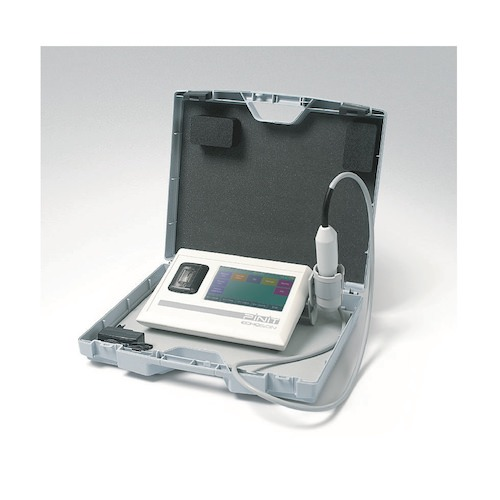
The Pinit Bladder Scanner offers portable convenience in a compact case design. Its quick, accurate measurements and basic urinary organ examination capabilities make it suitable for various clinical settings.
The BVT02 Bladder Scanner features a 3.5-inch colour LCD screen and mobile design, providing enhanced visualization and portability compared to entry-level models.
Premium Options
The Caresono HD5 Plus represents the premium tier of bladder scanning technology. Its wireless operation, patented no-calibration 3D probe, and high-resolution imaging deliver state-of-the-art performance for demanding clinical applications.
The MD-6000 Pro combines high-resolution imaging with ergonomic design and rapid measurement capabilities, suitable for high-volume clinical settings.
Making the Final Decision
When choosing a bladder scanner, create a decision matrix that weighs your specific requirements:
-
Define your clinical needs: What conditions will you be assessing? What patient population will you serve?
-
Establish your budget: Consider not just initial purchase price but also ongoing costs such as calibration, maintenance, and consumables.
-
Evaluate portability requirements: Will the device stay in one location or move between rooms or facilities?
-
Assess user skill levels: How much training time is available? Do you need an intuitive interface for multiple users?
-
Consider future needs: Will your clinical requirements expand? Choose a device that can grow with your practice.
-
Review warranty and support: What level of manufacturer support is included? What are the terms for repairs and service?
Conclusion
Selecting the right bladder scanner requires balancing clinical requirements, budget constraints, and operational considerations. By carefully evaluating your facility's specific needs and understanding the available options across new, ex-demo, and used equipment categories, you can make an informed decision that enhances patient care while optimizing cost-effectiveness.
As an independent supplier with over 15 years of experience, we help healthcare facilities across the UK find the perfect bladder scanning solution for their unique requirements. Whether you need premium wireless technology or cost-effective used equipment, we provide expert guidance and quality-assured devices to support your clinical objectives.